
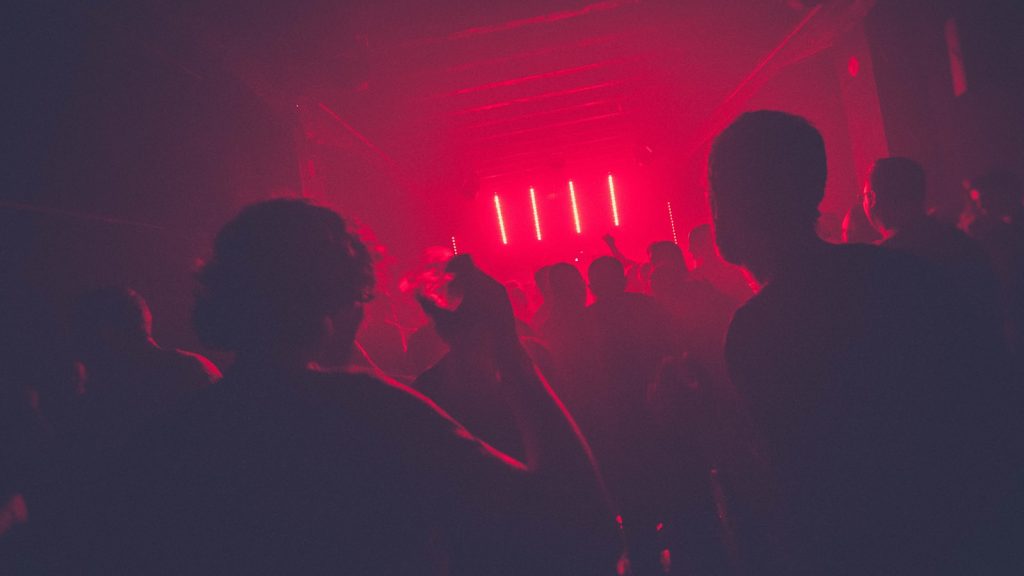
There is a moment — usually around 3 a.m., in a room with no signage and questionable ventilation — when you stop hearing the music and start feeling it. The kick drum locks into your heartbeat. The hi-hats dissolve the boundary between you and the stranger beside you. The DJ is not performing; she is conducting a conversation between several hundred people who showed up because someone texted someone who knew someone.
That is underground house music. Not a genre tag on a streaming playlist. Not an aesthetic. A lived experience that has been thriving in basements, warehouses, and back rooms for over four decades — and in 2026, it matters more than it ever has.
In a landscape dominated by algorithm-driven discovery and festival industrial complexes, the underground is not just surviving. It is actively pushing back. This guide explores what underground house music actually means, where it came from, who is keeping it alive, and how you can find your way in.
What Does “Underground” Actually Mean in House Music?
The word gets thrown around loosely. Brands use it to sell headphones. Festivals slap it on a secondary stage. But underground house music has always referred to something specific: music made for the dance floor rather than the charts, distributed through channels that prioritize community over commerce, and played in spaces where the experience takes precedence over the spectacle.
Underground electronic music is defined less by a particular sound and more by an orientation. It asks: who is this for? If the answer is “the people in the room right now,” you are probably underground. If the answer is “everyone who might click on this,” you are probably not.
That does not mean underground house exists in opposition to popularity. Some of the most influential underground house DJs have played to tens of thousands. The distinction is intent. Underground artists build from the dance floor outward, not from the market inward.
The Core Values
- Community over celebrity. The DJ is a facilitator, not a headliner.
- Longevity over virality. A track that works at 4 a.m. for twenty years beats one that trends for twenty days.
- Space over spectacle. The best underground nights happen in rooms where the sound system is the main investment, not the light show.
- Risk over formula. Playing a B2 from a white-label 12-inch nobody has heard — that is the move.
The Roots: A History of Underground House Music
Chicago: Where the Kick Drum Was Born
Every conversation about house music starts in Chicago, and for good reason. In the early 1980s, DJs like Frankie Knuckles, Ron Hardy, and Larry Heard were not inventing a genre on purpose. They were solving a problem: how do you keep a dance floor moving when disco has been declared dead?
The Warehouse — Frankie Knuckles’ legendary residency — gave house music its name. But the real innovation happened in the interplay between DJs and the communities they served. Chicago house was Black, queer, working-class, and defiantly joyful. It was underground not as a marketing choice but because mainstream culture wanted nothing to do with it.
Tracks like Larry Heard’s “Can You Feel It” and Marshall Jefferson’s “Move Your Body” were not just records. They were architecture — the load-bearing walls of a culture that would eventually span the globe.
Detroit: The Techno Parallel
While Chicago was building house, Detroit was building techno. The two scenes were siblings, sharing DNA but developing distinct personalities. Juan Atkins, Derrick May, and Kevin Saunderson — the Belleville Three — drew from Kraftwerk, Parliament-Funkadelic, and the specific experience of growing up in a post-industrial American city.
Detroit’s contribution to underground dance music cannot be overstated. The city proved that electronic music could be intellectual, emotional, and deeply rooted in Black futurism — all while making you move.
New York: The Garage and the Loft
New York’s underground house lineage runs through David Mancuso’s Loft and Larry Levan’s Paradise Garage. These were not nightclubs in the commercial sense. They were private parties, invitation-based gatherings where the sound system was sacred and the music selection was a curatorial act.
The Garage gave us garage house — warmer, more vocal, more gospel-inflected than its Chicago cousin. Levan’s legendary sets were marathons of emotional storytelling, moving from Philly soul to proto-house to raw edits he had made that afternoon.
Berlin: The Wall Comes Down, the Bass Goes Up
When the Berlin Wall fell in 1989, it did not just reunify a city. It created a vacuum — literally. Abandoned buildings, former power stations, and disused bunkers became the infrastructure for what would become the world’s most celebrated underground electronic music scene.
Tresor opened in a former department store vault in 1991. Bar 25 turned a strip of riverbank into a days-long hallucination. And Berghain, which opened in a former power plant in 2004, became arguably the most mythologized club in history — not because of hype, but because of an uncompromising commitment to the music and the experience.
Berlin proved that underground culture could sustain itself economically. Low cost of living, liberal licensing laws, and deep respect for nightlife as culture created an ecosystem where artists could take risks.
Montreal: The North American Underground Capital
Montreal occupies a unique position in underground house history. With its blend of French and English culture, affordable rents, and a vibrant arts scene, the city became a laboratory for experimental dance music in North America.
The after-hours culture was central. Clubs like Stereo, with its Richard Long sound system, became pilgrimage sites for house music purists. The city’s loft party scene — dense, sweaty, word-of-mouth-only affairs in Mile End and the Plateau — produced artists who understood that underground dance music was not about the venue but the intention.
It was in this environment that BLOND:ISH began her journey, cutting her teeth in Montreal’s warehouse parties before the world came calling. explore more
Key Artists and Underground House DJs Shaping the Sound
The underground does not have a Billboard chart, but it has consensus. These are some of the artists and underground house DJs whose work defines the current landscape:
The Architects
- Ricardo Villalobos — The Chilean-German producer who can make a single loop feel like a universe. His sets at Berghain and DC-10 are the stuff of legend.
- Moodymann — Kenny Dixon Jr. represents Detroit’s soul in its purest form. His music refuses categorization, blending house, jazz, funk, and spoken word into something entirely his own.
- Nina Kraviz — From Siberia to the world’s biggest underground stages, Kraviz brought a raw, acid-inflected energy that redefined what a DJ set could feel like.
The Bridge Builders
- Dixon — The Innervisions co-founder whose meticulous track selection and flawless mixing became the gold standard for underground house DJs through the 2010s and beyond.
- BLOND:ISH — Vivie-Ann Bakos represents a particular kind of underground authenticity: rooted in Montreal’s warehouse scene, refined through years at DC-10 and the world’s best underground stages, and always pushing toward something more conscious and connected. Her Abracadabra label has become a home for music that bridges the deep, the melodic, and the spiritual. explore more
- The Martinez Brothers — Bronx-born, Garage-raised, globally relevant. They carry New York’s underground lineage into the festival era without losing the thread.
The New Guard
- Mala Junta — The Latin American collective redefining what underground house sounds like when filtered through cumbia, reggaeton, and Andean folk traditions.
- Saoirse — The Irish DJ whose BBC Radio 1 residency and club sets demonstrate that underground sensibility and broad reach are not mutually exclusive.
- Habibi Funk — Jannis Stuertz’s label and DJ project mines the archives of North African and Middle Eastern funk, disco, and pop, proving that the underground is a global phenomenon with roots everywhere.
Iconic Venues and Club Nights: Where Underground House Lives
Europe
- Berghain (Berlin) — The benchmark. Its no-phone policy, Funktion-One sound system, and marathon opening hours create an environment where the music is the only content.
- DC-10 (Ibiza) — Proof that Ibiza is not just about superclubs. The Monday Circoloco parties at DC-10 have been an underground institution since 1999. BLOND:ISH’s residency here cemented her reputation as a DJ who could hold a dance floor for hours on end. explore more
- Concrete (Paris) — Built on a barge on the Seine, Concrete brought Berlin’s ethos to Paris with afternoon-to-morning parties that changed the city’s relationship to electronic music.
- The Warehouse Project (Manchester) — Operating in various disused spaces since 2006, WHP channels the spirit of the Hacienda into a modern context.
North America
- Nowadays (New York) — An indoor/outdoor space in Ridgewood, Queens, that has become the spiritual home of New York’s current underground house scene.
- Smart Bar (Chicago) — Still going since 1982, Smart Bar is a direct link to Chicago’s house music origins. Its low ceiling and booming system make every night feel like a secret.
- Stereo (Montreal) — The after-hours temple with one of North America’s finest sound systems. If you have not danced at Stereo until noon, you have not fully experienced Montreal.
- Public Works (San Francisco) — Keeping the Bay Area’s underground tradition alive with bookings that favor selectors over stars.
The Rest of the World
- Bassiani (Tbilisi) — Georgia’s most important club, built in a Soviet-era swimming pool, where the dance floor became a space of political resistance and queer liberation.
- The Cakeshop (Seoul) — Before its closure, Cakeshop was the beating heart of Seoul’s underground, proving that house music’s reach is truly global.
The Role of Labels in Underground House Music
In the underground, labels are not just distribution channels. They are curatorial voices, quality filters, and community hubs. The label you release on says something about who you are.
Labels That Define the Underground
- Crosstown Rebels — Damian Lazarus’s imprint has been a bridge between underground credibility and global visibility since 2003. Artists like Art Department, Maceo Plex, and BLOND:ISH have all called it home.
- Kompakt — The Cologne-based label that defined minimal techno and ambient house for an entire generation. Their Pop Ambient compilations are a cultural institution.
- Perlon — Zip and Ricardo Villalobos’s label, where minimalism is not a limitation but a philosophy. Perlon releases reward patience.
- Abracadabra — Founded , Abracadabra reflects a vision of underground house music that incorporates world music influences, conscious intention, and a commitment to sustainability. The label has become a platform for artists who share that ethos. explore more
- Innervisions — Dixon, Ame, and Henrik Schwarz’s label, whose distinctive artwork and meticulously crafted releases set the standard for what underground house could look and sound like.
- Running Back — Gerd Janson’s Frankfurt label, which refuses to stay in one lane, moving freely between house, disco, electro, and whatever else feels right.
Why Labels Still Matter
In an age of self-releasing on Bandcamp and direct-to-Spotify distribution, underground labels provide something algorithms cannot: context. When you see a Perlon catalog number, you know something about the music before you hear it. When Crosstown Rebels signs an artist, it is a signal to DJs and dancers worldwide. The underground values taste and long-term relationship-building over data-driven A&R.
Underground vs. Mainstream: The Tension That Fuels the Music
The relationship between underground house and the mainstream is not simple opposition. It is a cycle. The underground innovates. The mainstream absorbs. The underground moves on.
What Gets Lost in Translation
When an underground sound crosses over, certain things inevitably change:
- Duration. Underground house tracks are often 8-12 minutes long, designed for DJ mixing. Radio and streaming favor 3-4 minutes.
- Ambiguity. The best underground tracks leave space for interpretation. Pop demands hooks and clarity.
- Context. A track that devastates at 5 a.m. in a dark room might sound flat on laptop speakers at 2 p.m.
- Risk. The underground rewards the unexpected. The mainstream rewards the familiar.
The EDM Question
The explosion of EDM in the 2010s brought electronic music to stadiums and created a sharp cultural divide. For many underground house DJs, EDM represented everything they were not: formulaic, spectacle-driven, and disconnected from house music’s roots in Black and queer communities. But the reality is more nuanced. Some EDM fans became house fans became underground lifers. The pipeline exists.
Streaming and the Algorithm Problem
Spotify and Apple Music have made more music accessible than ever. They have also flattened context. An underground deep house track sits next to a pop-house crossover in the same playlist, and the algorithm does not know the difference. This is why physical formats, independent radio, and curated platforms remain essential to the underground.
How to Discover Underground House Music
If you are reading this and thinking “I want in,” here is how to start.
Record Stores (Yes, They Still Exist)
- Hard Wax (Berlin) — The gold standard. Their online reviews are practically an education in electronic music.
- Phonica (London) — A Soho institution with impeccable taste and helpful staff.
- Rush Hour (Amsterdam) — Deep crates spanning house, techno, jazz, African music, and everything in between.
Online Platforms
- Resident Advisor — Still the closest thing the underground has to a paper of record. Reviews, features, and event listings worldwide.
- Bandcamp — The most artist-friendly platform, and a goldmine for underground house releases that never make it to streaming.
- Discogs — Not just for buying records. The database itself is an encyclopedia of underground music history.
Boiler Room and Live Streams
Boiler Room changed the game when it launched in 2010, giving the underground a visual language that could travel globally. A Boiler Room set from a basement in London could inspire a party in Sao Paulo. In 2026, platforms like HOR (Berlin) and The Lot Radio (New York) continue the tradition. These are not replacements for being in the room, but they are the best way to discover new underground house DJs from your living room.
Radio
- NTS Radio — London-based, globally minded internet radio with shows covering every corner of underground music.
- Rinse FM — A pirate radio station turned legal institution, still essential for UK underground sounds.
- The Lot Radio — Broadcasting from a glass booth in Brooklyn, with an eclectic mix of DJs and genres.
The Old-Fashioned Way
Talk to people. Go to the small night, not the big one. Stay past the headliner. The underground has always been a word-of-mouth culture, and no algorithm can replicate someone handing you a flyer and saying “trust me.”
BLOND:ISH and the Underground: A Journey From Montreal Warehouses to the World Stage
BLOND:ISH — the artist name of Vivie-Ann Bakos — embodies a particular arc in underground house music: the artist who grows from local scenes to global stages without abandoning the values that made the journey meaningful.
The Montreal Foundation
The story starts in Montreal’s after-hours scene. Before the international bookings, before DC-10, before the festival circuits, there were warehouse parties in industrial neighborhoods where the only promotion was a text message chain. These rooms — humid, loud, and full of people who had come specifically for the music — shaped everything that followed.
Montreal’s scene taught a fundamental lesson: the dance floor is a conversation, not a broadcast. That ethos carried forward into every set, every release, and every decision about how to build a career in underground house music. explore more
DC-10 and the Ibiza Underground
Ibiza is often mischaracterized as purely commercial, but the island has a deep underground history. DC-10’s Circoloco parties — where BLOND:ISH became a resident — represent the counterpoint to the superclub excess. Open-air, afternoon start times, no VIP pretension, and a sound that leans toward deep, hypnotic, and uncompromising.
Playing DC-10 is a specific skill. The afternoon sun, the open-air setting, and the marathon format demand a DJ who can build tension over hours, not minutes. It is the antithesis of the “banger every two minutes” approach that dominates mainstream electronic music.
Abracadabra: Building a Label With Intention
The founding of Abracadabra was a natural extension of the underground ethos. Rather than simply releasing records, the label was built around a broader vision: music as a vehicle for consciousness, sustainability, and global connection. explore more
The roster reflects this intention. Abracadabra releases draw from world music traditions, incorporate organic instrumentation, and resist the temptation to chase trends. In a scene that can be insular, the label looks outward — toward Africa, South America, the Middle East — for inspiration and collaboration.
Sustainability and the Underground
BLOND:ISH has been vocal about sustainability in the music industry, from carbon offsets for touring to reducing waste at events. This is not separate from the underground ethos; it is an extension of it. If underground house music is about building community and thinking long-term, then caring for the planet is part of the equation. explore more
Frequently Asked Questions About Underground House Music
What is underground house music?
Underground house music refers to house music produced, distributed, and performed outside mainstream commercial channels. It emphasizes dance floor functionality, artistic integrity, and community connection over chart performance or streaming numbers. The term speaks to both the physical spaces (warehouses, basements, small clubs) and the cultural values: authenticity, experimentation, and grassroots distribution.
How is underground house different from regular house music?
The musical elements — four-on-the-floor kick drums, syncopated hi-hats, basslines, and samples — are shared across both. The difference lies in production approach, distribution, and context. Underground house tends to be longer, more repetitive, more subtle in its progressions, and designed for DJ mixing in club environments rather than standalone listening. It circulates through independent labels, vinyl releases, and curated platforms rather than major label distribution networks.
Who are the most influential underground house DJs?
Consistently cited names include Frankie Knuckles, Larry Levan, Larry Heard, Ricardo Villalobos, Moodymann, Dixon, Nina Kraviz, BLOND:ISH, The Martinez Brothers, and Saoirse. Each represents a different thread, from Chicago’s origins to the global present. explore more
Where can I hear underground house music?
Start with clubs known for underground programming: Berghain (Berlin), DC-10 (Ibiza), Smart Bar (Chicago), Nowadays (New York), or Stereo (Montreal). Online, explore Resident Advisor for events and reviews, Bandcamp for releases, and Boiler Room or NTS Radio for streamed sets. Locally, look for promoters and collectives running small events — they are the foundation of every underground scene.
Is underground house music still relevant in 2026?
More than ever. As mainstream electronic music becomes increasingly algorithmic and homogeneous, the underground offers an alternative: music made by humans for humans, experienced in physical spaces, and distributed through networks built on trust rather than data. The tools have changed — producers use Ableton instead of hardware — but the values remain constant.
What is the difference between underground house and deep house?
Deep house is a subgenre defined by specific sonic characteristics: warm pads, jazz-influenced chords, soulful vocals, and a generally mellow, introspective mood. Underground house is a broader cultural designation that can encompass deep house, minimal house, acid house, tech house, and other subgenres. A deep house track can be underground or mainstream; the terms describe different axes.
How do I support underground house music?
Buy records and digital releases directly from artists and labels (Bandcamp is ideal). Attend local events and pay the cover. Follow and share independent radio stations and streaming channels. If you DJ, buy your music rather than ripping it. The underground economy runs on direct support, not streaming royalties.
Go Deeper: Your Underground Journey Starts Here
The underground is not a destination. It is a practice — a commitment to showing up, listening deeply, and valuing experience over content. Whether you are a seasoned dancer or someone who just felt something stir while reading this, the next step is the same: find a room, close your eyes, and let the music do what it has been doing since Chicago in 1983.
Explore BLOND:ISH’s upcoming events to experience underground house music live. explore more Browse the latest Abracadabra releases to hear what the underground sounds like right now. explore more And the BLOND:ISH journal has more stories from the intersection of music, consciousness, and culture. explore more
The bass is calling. Follow it down.